
Recently, a visit to the School of Intelligent Manufacturing and Science and Technology at Nanjing University of Science and Technology in Jiangyin revealed a lively yet orderly atmosphere in the Intelligent Robotics Laboratory. Students were gathered around prototypes, debugging code and thoroughly engrossed in their work. “We previously collaborated with a local photovoltaic company to develop a cleaning robot and discovered that the underlying technology could actually be adapted for home use,” said Dr. Wang Yumo as he guided students through the debugging process. “So we naturally shifted our focus to home applications and began developing home assistant robots. This is not only a research project for the lab but also an innovation and entrepreneurship initiative planned for incubation in Jiangyin.”
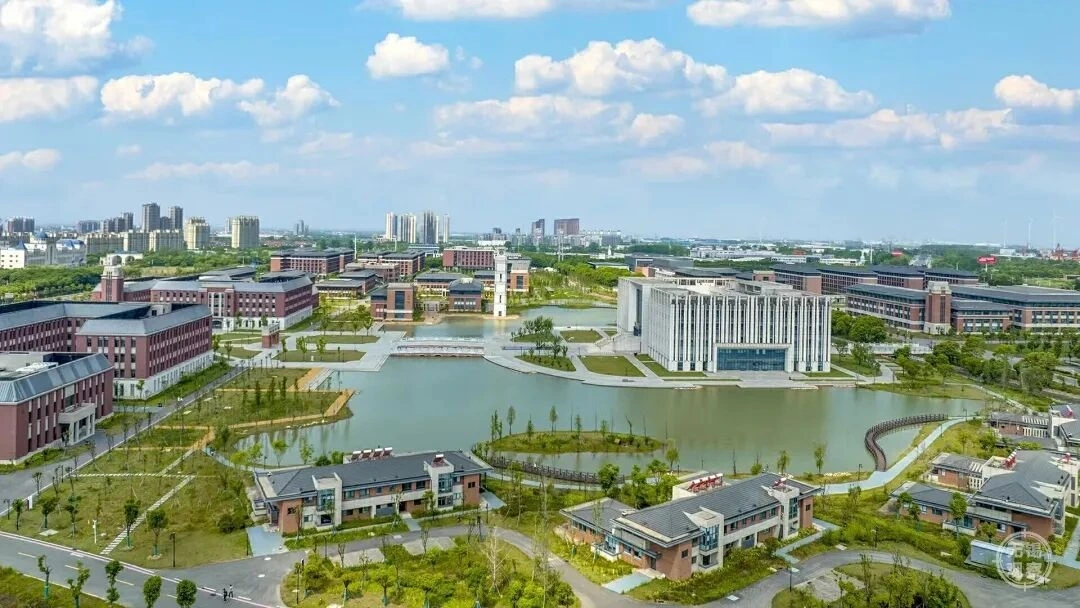
This “robot boom” has spread from a single laboratory, creating a wave of resonance that has reverberated throughout Jiangyin. The Lingang Science and Technology Innovation Park, located right next to the campus, has already attracted eight “robotics+” companies covering multiple sub-sectors such as surface inspection, laser processing, and automated welding, with a number of new projects continuing to be introduced. Looking across the entire city of Jiangyin, an increasing number of traditional enterprises are proactively pivoting to enter new markets, and an industrial transformation from “manufacturing” to “smart manufacturing” is quietly unfolding.
Empowering Innovation from a Single Laboratory
Wang Yumo’s team’s industry-academia-research collaboration is taking root and flourishing in more industrial sectors across Jiangyin.
At Wuxi Jintiancheng Eco-Technology Co., Ltd., an AI visual recognition system is now operating 24 hours a day, accurately capturing every detail at maintenance sites; an underwater robot developed in collaboration with Jiangnan Water is undergoing continuous optimization and will eventually be able to precisely locate pipeline damage points; and an intelligent inventory-taking robot, jointly developed with ZeroCloud Technology, enables automatic identification and accurate inventory counting of goods…
These technologies, which directly address pain points, did not emerge out of thin air. Wang Yumo also serves as the captain of “Combat,” the robotics team at Nanjing University of Science and Technology’s Jiangyin Campus. While leading the team in competitions, he and his members repeatedly refined core technologies such as AI visual recognition, automatic obstacle avoidance, and precision control for their robotic suits. These competition-tested technologies happen to align perfectly with the urgent needs of many enterprises in Jiangyin.
“Our goal is to bring laboratory technologies out of the ‘ivory tower’ and truly solve real-world problems for enterprises, especially in specialized industries with harsh working environments,” said Wang Yumo.
The impact of these technologies has extended from the industrial sector to the vast farmlands. The Jiangyin Branch of the Key Laboratory of Intelligent Harvesting Robots under the Ministry of Agriculture and Rural Affairs has also been established at the Jiangyin Campus of Nanjing University of Science and Technology. Inside the laboratory, Wang Yumo leads his students in setting up a simulated vegetable greenhouse environment. “From fruits to crops, and from indoor to outdoor settings, the way robots operate varies greatly across different scenarios,” Wang Yumo revealed. He added that the intelligent harvesting robots developed by the team will soon be deployed in local vegetable greenhouses in Jiangyin. “By establishing a data training center, we aim to introduce a range of application scenarios and participate in the formulation of industry standards.”
The Rise of a “Cyber Park” Cluster
Right next to the campus, in the Lingang Science and Technology Innovation Park, a vibrant “Cyber Park” is quietly taking shape. Upon entering, the most striking impression is that every robot is “showing off its unique skills.”
Some robots excel at “spotting flaws.” Using “optical + AI” technology, Qiao Yi robots detect micron-level defects on glass surfaces in a matter of seconds. While manual inspection of smartphone glass covers takes 30 seconds, Qiaoyi’s entire process—from “eyes” to “brain”—takes just 0.8 seconds. A single unit operating 24 hours a day can replace 25 to 30 workers. It is precisely this cutting-edge capability that has made Qiaoyi the only company in China capable of intelligent, mass-scale inspection of ultra-thin glass for foldable smartphones. Not only does it “spot defects” for global giants like Huawei, Apple, and Samsung, but it also participates in the formulation of industry technical standards.
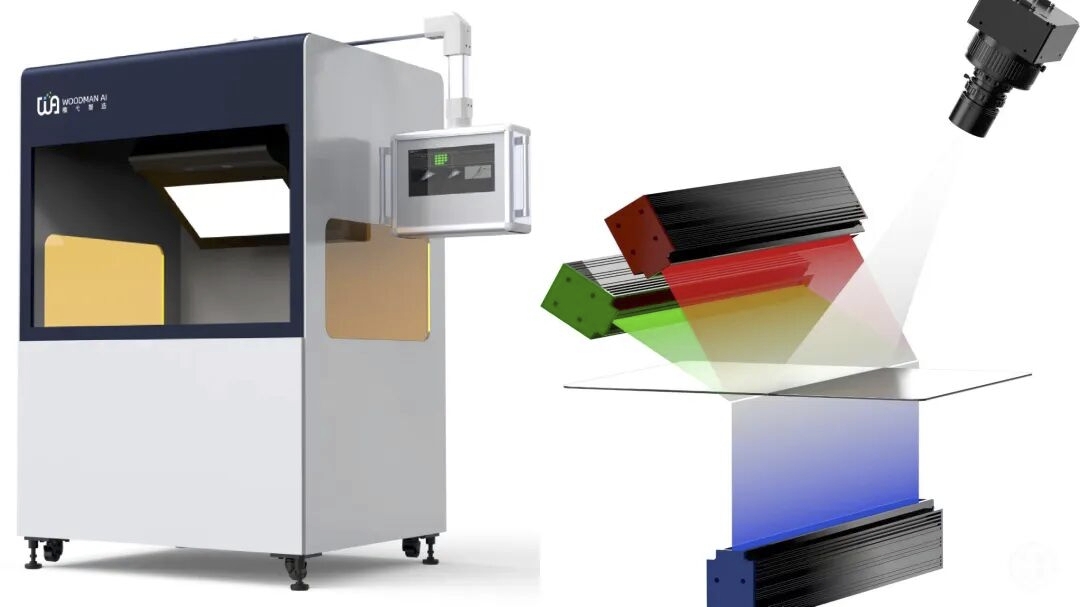
Others, meanwhile, have focused on ‘welding’. Kaiyu’s new welding robots have already entered the supply chains of SAIC Volkswagen, Siemens and ABB. Unice Robotics is not to be outdone, having successfully entered the supply chains of several leading automotive manufacturers, including Xiaomi and Li Auto.
Others are focusing on ‘material handling’. Nain Industrial’s fifth-generation assist arm can lift goods weighing up to 1.5 tonnes with a gentle lift; its operational efficiency is comparable to that of six forklift trucks, with a precision of plus or minus one millimetre, and it is equipped with AI-powered automatic obstacle avoidance. Having made a precise entry into the artificial intelligence sector, Nain Industrial’s order book is already fully booked until July, whilst its R&D investment remains consistently above 25 per cent.
Although these enterprises operate in different sectors, they share a common ‘fertile ground’, creating a synergy where ‘the companies on the floor above and below are upstream and downstream partners’. ‘There are quite a few sister companies within the park; since moving here, we’ve all been helping one another,’ explains Yuan Zhangjun, Sales Manager at Kaiyu New. For instance, when it comes to manufacturing processes, routine tasks such as test welding can be carried out with the assistance of sister companies within the park.
A Transformative Breakthrough in a Small Bearing
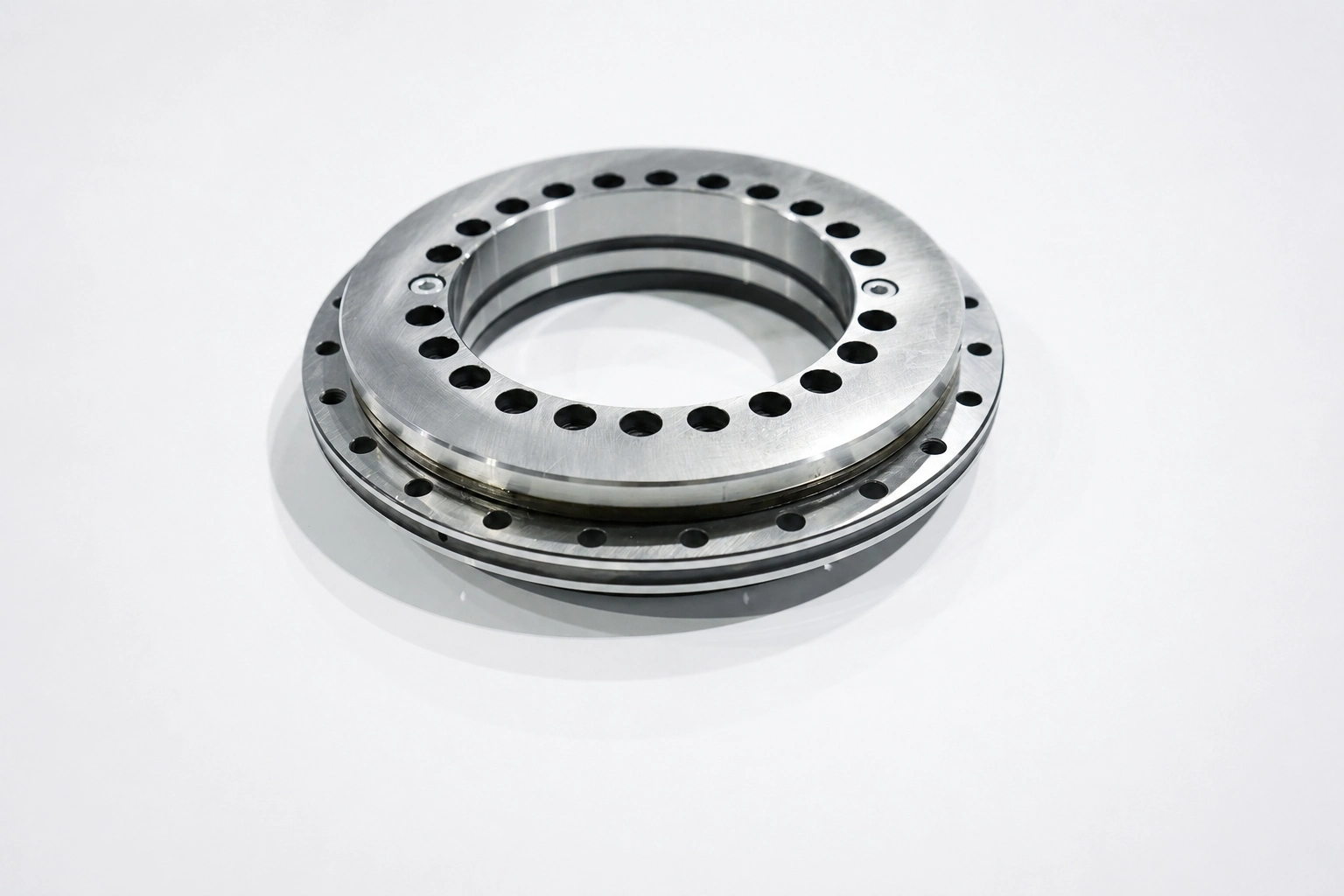
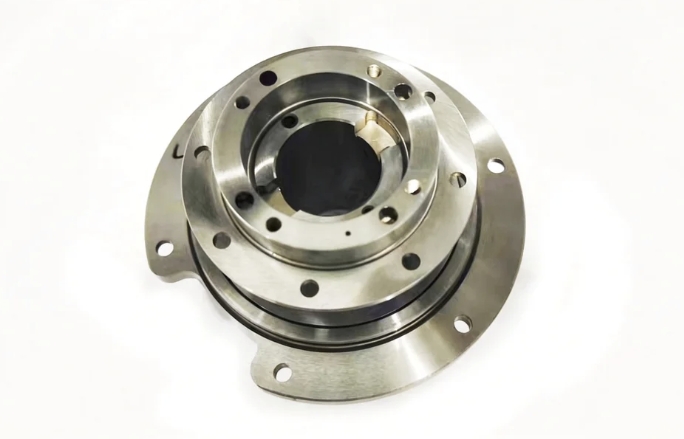
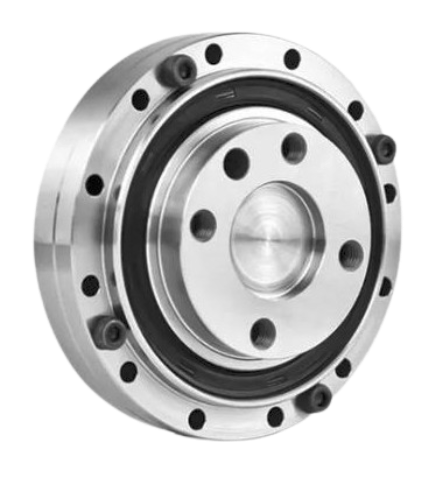
It is those flexible and reliable ‘joints’ that truly bring robots to life. In Jiangyin, traditional bearing manufacturers are leveraging this to make a crucial leap forward.
The synergy between industry, academia and research is evident at Pinzhide Bearings. In response to the company’s needs, Wang Yumo’s team has developed a high-performance motor drive system that is deeply integrated with precision bearings, with the potential to form robotic joint modules for the field of embodied intelligence.
Meanwhile, in the Jiangyin Lingang Development Zone, another bearing manufacturer has chosen to take the initiative to break through. Stepping inside Jiangsu Dena Precision Bearing Co., Ltd., Executive Deputy General Manager Liu Yu showed a reporter a precision joint component that had just rolled off the production line. “This is the ‘skeleton’ we’ve designed for collaborative robots,” he explained. “The backlash is controlled to within 10 seconds, and it has a service life of over 15,000 hours.” Liu Yu noted that just three years ago, these figures existed only on R&D drawings.
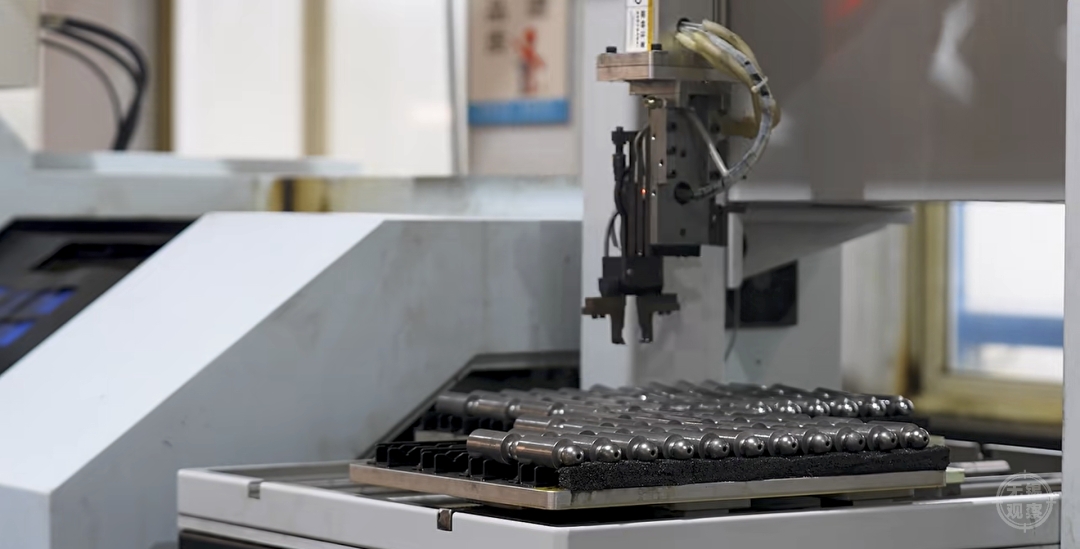
“The greatest challenge was bridging the gap in technical standards,” recalls Liu Yu. He notes that the biggest pain points during the early stages of the transformation were insufficient product precision, short service life and poor consistency. “We virtually scrapped our original production processes and rebuilt our quality control system from scratch.” Over the course of three years, the company maintained its R&D expenditure at over 15 per cent of turnover, collaborating with universities to tackle core technologies such as high-precision transmission, highly wear-resistant materials and flexible force control, gradually raising product yield to 98.7 per cent.
Today, Dena Precision’s products have entered the supply chains of leading original equipment manufacturers, where they are used in the joints of industrial and humanoid robots. “Orders are already booked until the first half of 2027,” says Liu Yu. The company is actively expanding into the European and Southeast Asian markets and plans to add two new intelligent production lines over the next two years, tripling its current production capacity. “Our goal is clear: to become a leading global supplier of core components for robotic joints.”
This breakthrough with a single small bearing clearly illustrates that this is not only the company’s path to transformation, but also a microcosm of Jiangyin’s manufacturing sector ascending to the high end of the industrial chain.

